|
|
Physics of the Polar with a Brown Dwarf V379 Vir |
Russian version |
|
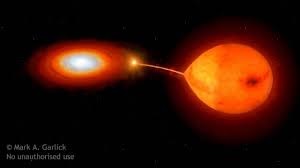
Cataclysmic variables (CVs) are close binaries with orbital periods ranging from 80 minutes to several hours, in which a white dwarf accretes matter from a late-type donor star. The mass transfer from the donor is driven by tidal forces (Roche lobe overflow). Most CVs have weakly magnetized white dwarfs, allowing an accretion disk to form around them (see Fig. 1).
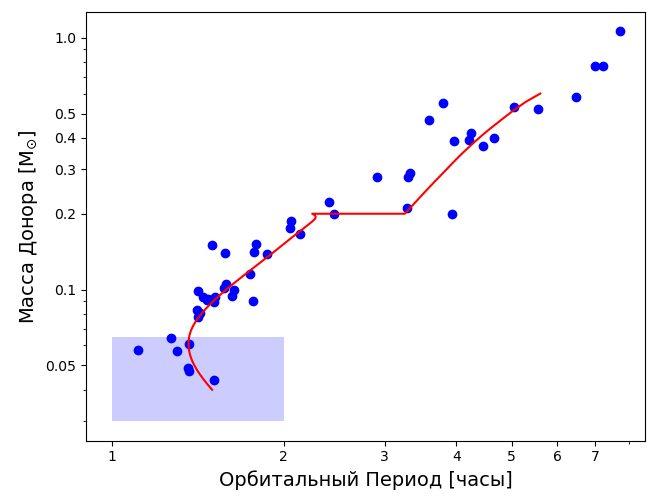
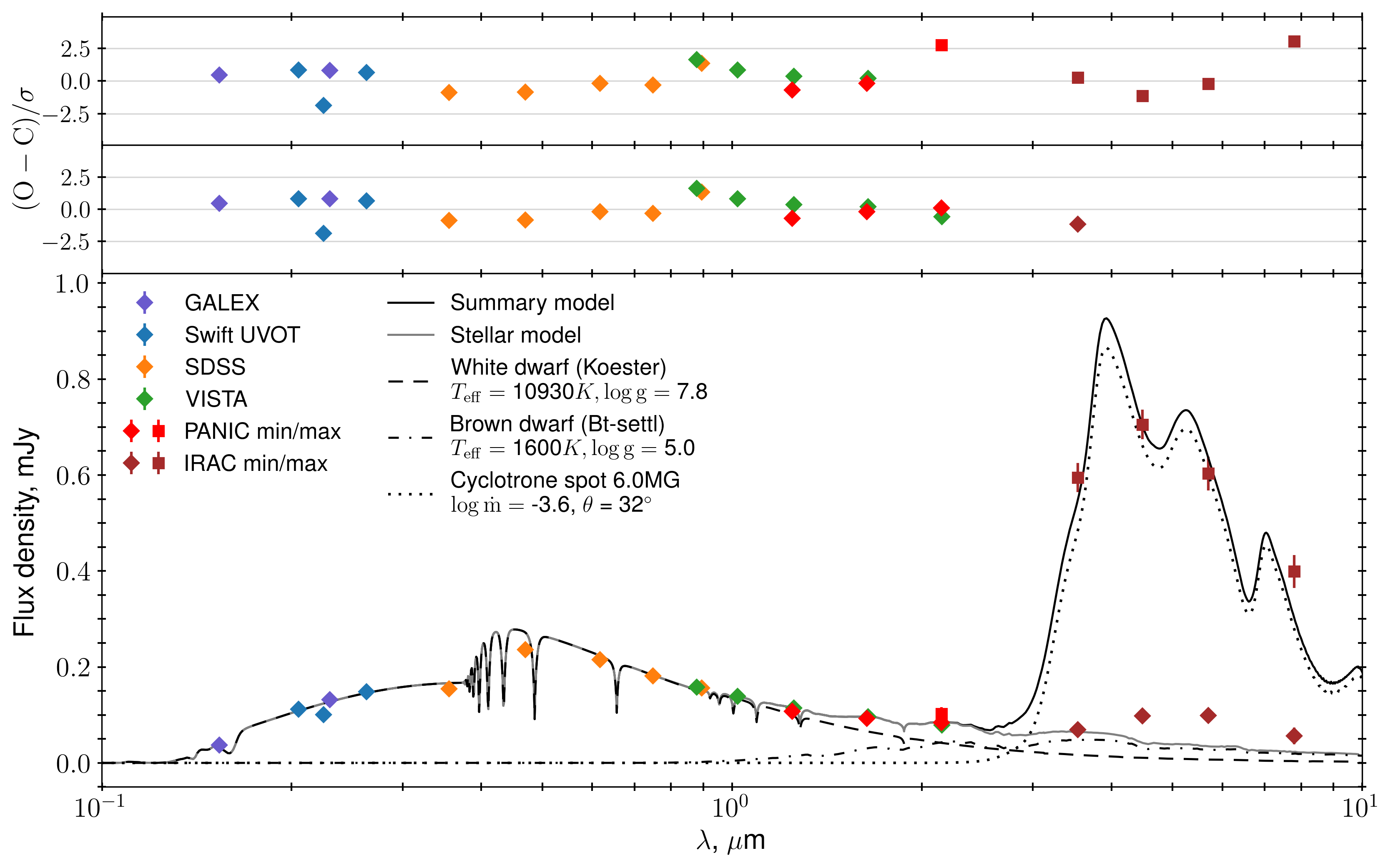
The evolution of CVs is governed by the loss of orbital angular momentum, which occurs through two primary mechanisms: magnetic braking via the donor's stellar wind and gravitational radiation. These mechanisms lead to a reduction in the orbital period down to ~80 minutes. By this stage, the donor has lost a substantial fraction of its mass and has evolved into a brown dwarf. Further evolution is accompanied by a period increase — the systems effectively “bounce” back from the minimum period. Such objects are therefore referred to as period-bouncers (see Fig. 2). However, the observed population of white dwarfs does not align with theoretical predictions. According to evolutionary models, the fraction of period-bouncers should reach ~70%, whereas observations yield only a few percent. To explain this discrepancy, a hypothesis has been proposed suggesting that the white dwarf becomes magnetized during the late stages of its evolution. In this scenario, the interaction between the magnetic field of the rapidly rotating white dwarf and the donor star leads to expansion of the binary system and the cessation of accretion. Such a system would then cease to behave as a typical CV. The main candidate for such “turned-off” (magnetically detached) systems is V379 Vir. This object belongs to the class of polars — CVs containing a strongly magnetized white dwarf. The magnetic field strength of the white dwarf in V379 Vir is ~7 MG, and the donor is a brown dwarf. The system shows an exceptionally low accretion rate, which was previously interpreted as evidence of a detached configuration. It has been proposed that mass transfer in this system occurs via accretion of the brown dwarf’s stellar wind onto the white dwarf’s magnetosphere. Gas falling onto the accretor’s surface forms an accretion spot near the magnetic pole, which serves as the source of the cyclotron emission observed in the infrared. In this work, we analyzed the archival phase-resolved photometry of V379 Vir across a wide spectral range, including observations in the ultraviolet (GALEX, Swift satellites), optical (ZTF, SDSS surveys), infrared (VISTA telescope, WISE and Spitzer space observatories). By modeling the optical and ultraviolet fluxes, the mass (M ≈ 0.65 M⊙) and temperature (T = 10930 ± 350 K) of the white dwarf were found (see Fig. 3). Analysis of the near-infrared fluxes yielded a donor temperature of 1600 ± 180 K and provided constraints on its mass in the range of 0.014-0.065 M⊙. Modeling of the mid-infrared fluxes, based on Spitzer data, led to a refined estimate of the accretion rate of ≈ 3 × 10-13 M⊙/yr. This value turned out to be several orders of magnitude higher than the expected wind mass-loss rate (< 10-15 M⊙/yr), inferred from XMM-Newton constraints on the coronal X-ray flux. Consequently, V379 Vir does not appear to be a representative of magnetically detached CVs. This finding either underscores the need for further searches for such systems or calls for a revision of the existing theoretical framework. In any case, the observed accretion rate remains anomalously low for a CV at the corresponding evolutionary stage (~ 10-11 M⊙/yr).
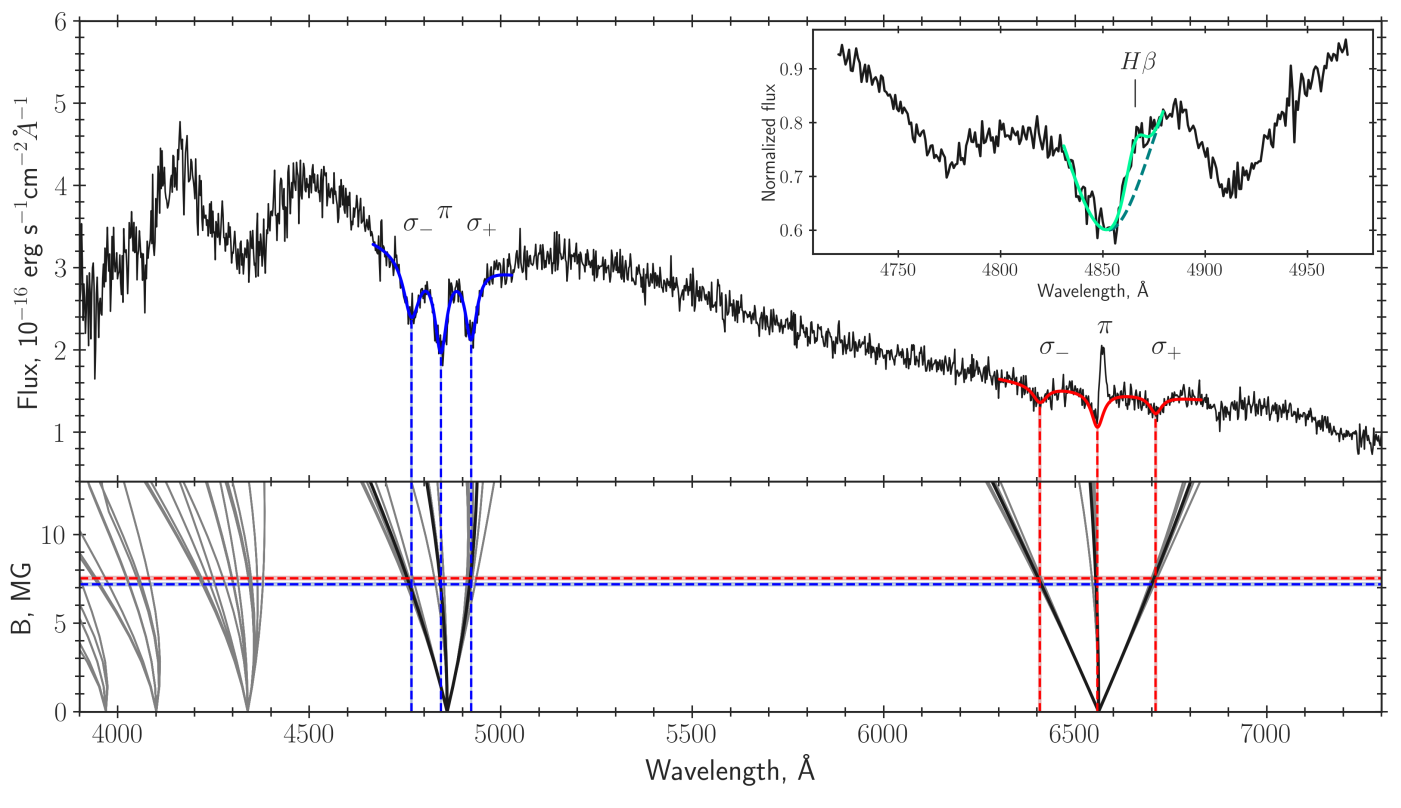
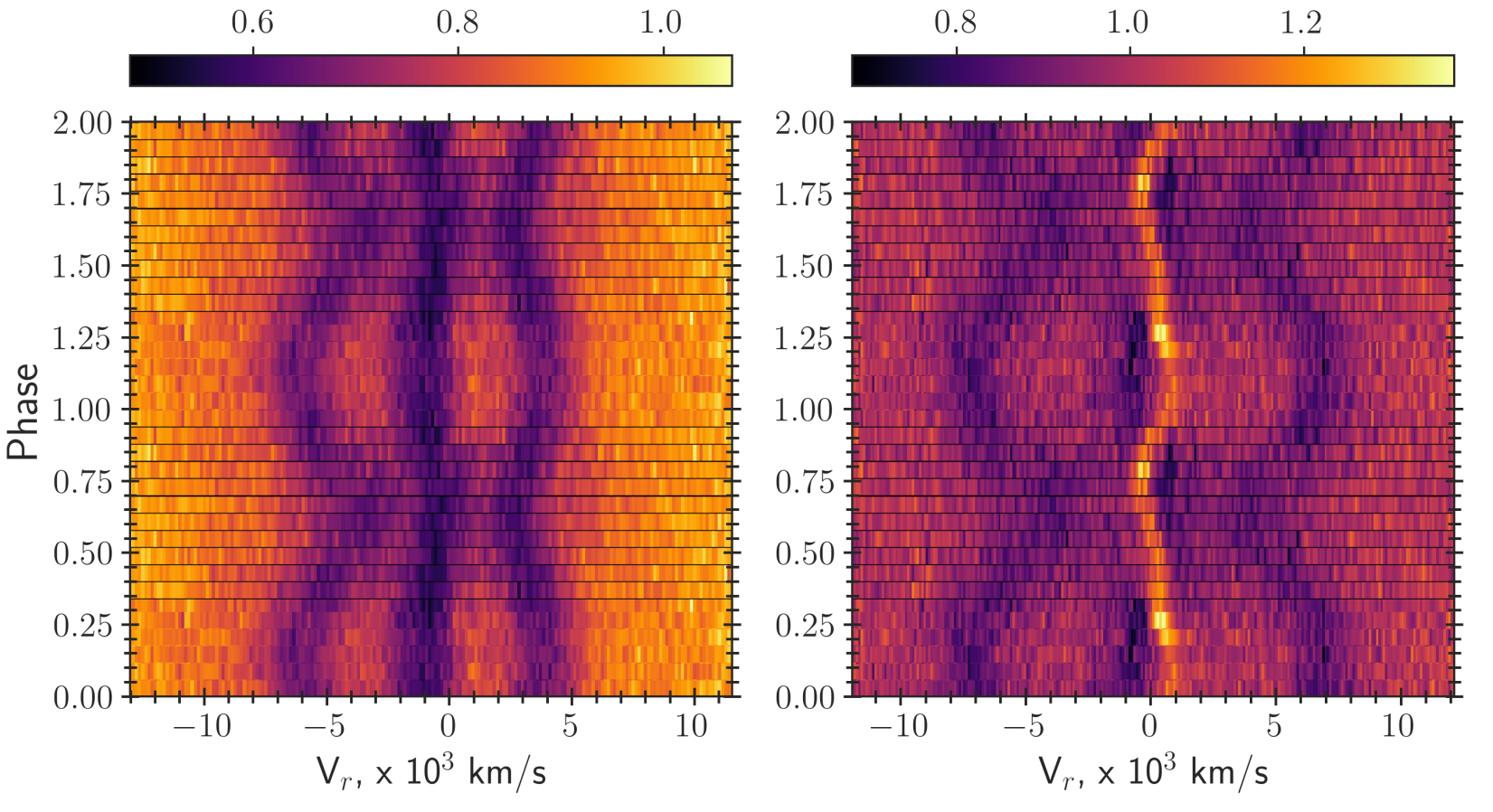
It is well known that CVs can enter so-called low states, characterized by a strong suppression of accretion and a corresponding drop in brightness by several magnitudes. The nature of this phenomenon remains poorly understood, but the most widely accepted hypothesis links these low states to disruption of mass transfer by local magnetic fields on the donor star. Such a low state could, in principle, explain the suppressed accretion observed in V379 Vir. However, if this is the case, the system holds the record for the longest such state—approximately 20 years. Spectroscopic observations of V379 Vir were performed with the 6-meter BTA telescope using the SCORPIO instrument. The resulting spectra exhibit split Hα and Hβ lines originating in the white dwarf's atmosphere (see Fig. 4). The magnitude of the Zeeman splitting varies significantly with the dwarf's rotation period (ranging from 4.5 to 7.5 MG) indicating a non-uniform magnetic field distribution across its surface: at each rotation phase, we observe a disk-averaged magnetic field value. Our analysis of the rotational modulation of the splitting reveals that the topology of the white dwarf’s magnetic field deviates substantially from a simple dipole configuration. In addition to absorption features, the spectra of V379 Vir show a weak emission in the Hα line (see Figs. 4, 5). It was previously thought that this emission arises on the irradiated hemisphere of the donor star, resulting from the reprocessing of X-rays produced at the accretion spot. However, our analysis of the orbital behavior of this emission line revealed that its source is an accretion stream. This finding has important implications for the study of magnetic CVs near the minimum period: the emission lines observed in such systems are likely of the same origin. Consequently, orbital behavior of these lines loses its diagnostic value for determining component masses. V379 Vir can rightly be regarded as a unique CV. Although the system does not fulfill its “magnetically detached” status, it remains an exceptionally rare example of magnetic CVs harboring a brown dwarf donor. Its moderate magnetic field strength confines the cyclotron emission from the accretion spot to the infrared, thereby eliminating its contribution to the optical range and setting the object apart from most magnetic CVs. The combination of this property with a relatively high brightness for such objects (~ 18 mag) opens up unique opportunities to study the magnetic field topology using spectropolarimetry. Further observations of the Hα line at higher spectral resolution will enable a detailed investigation of the interaction of the accretion stream with the white dwarf’s magnetosphere.
Published:
|